THCA hemp flower contains much more than a single cannabinoid. Alongside THCA, the plant naturally contains other cannabinoids, aromatic terpenes, flavonoids and other compounds that help shape each strain’s distinctive profile.
The entourage effect is the theory that some of these naturally occurring compounds may interact with or influence one another rather than acting entirely independently. This is why the concept looks beyond THCA percentage alone and considers the wider combination of cannabinoids, terpenes and other plant compounds present in the flower.
However, the entourage effect should be understood as a proposed interaction rather than a proven benefit. Research into these interactions is ongoing, and current evidence does not establish a consistent or predictable entourage effect in humans.
In this guide, we explain what the entourage effect means, which compounds may be involved and how the idea relates to THCA flower for hemp tea.
Browse our premium range of US-imported THCA flowers today, including Type 1 and Type 2. If you need help with your order, please contact us.
What does the entourage effect mean?
The entourage effect describes the theory that naturally occurring cannabis compounds may interact with or influence one another rather than acting entirely independently.
Rather than considering THCA, THC or CBD in isolation, the theory looks at the wider combination of cannabinoids, terpenes, flavonoids and other compounds found in the plant. Researchers are interested in whether the presence of one compound could potentially enhance, reduce or otherwise modify the activity of another.
For example, THCA flower may contain:
- THCA as its dominant cannabinoid
- CBD (cannabidiol) or CBDA, its acidic precursor
- Smaller quantities of other cannabinoids
- Aromatic terpenes
- Naturally occurring flavonoids
The proportions of these compounds vary between strains, creating different cannabinoid, aroma and flavour profiles.
For more background on THCA itself, read What Is THCA? A Beginner’s Guide.
Why are people interested in the entourage effect?
The entourage effect is of interest because the theory suggests that a combination of plant compounds may influence overall activity differently from a single cannabinoid on its own.
Researchers are exploring how cannabinoids and other plant compounds may interact with the endocannabinoid system and other biological targets in the body. However, this does not mean that a combination is necessarily stronger, better or more potentially beneficial. Current evidence has not established a consistent or predictable entourage effect in humans.
For that reason, it is best understood as a way of looking at the whole cannabinoid and terpene profile, rather than assuming one individual compound determines everything about a flower.
Which compounds may contribute to the entourage effect?
No single compound is responsible for the entourage effect. The idea centres on potential interactions among several parts of the plant.
| Compound | Role within hemp flower |
|---|---|
| THCA | A naturally occurring cannabinoid commonly dominant in Type 1 THCA flower |
| CBD / CBDA | Cannabinoids found more prominently in balanced Type 2 flower |
| Other cannabinoids | Compounds such as CBG and CBC may occur at lower concentrations |
| Terpenes | Aromatic compounds that contribute significantly to aroma and flavour |
| Flavonoids | Naturally occurring plant compounds associated with characteristics such as colour |
The exact combination varies by genetics, cultivation and the individual flower.
This is also why cannabinoid labels alone cannot describe every characteristic of a product. Two buds can contain similar THCA concentrations but have noticeably different terpene profiles, tastes and aromas.
For a practical example of how cannabinoid ratios vary, read our guide to Type 1 vs Type 2 THCA flower.
What role do terpenes play?
Terpenes are aromatic compounds found naturally in many plants, including hemp. They play an important role in giving different THCA strains their distinctive aromas and flavours.
Common terpenes found in hemp include myrcene, pinene, limonene, linalool and caryophyllene. Their presence and concentration can contribute to profiles ranging from earthy flavours to citrus, fruity, floral or pine-like notes.
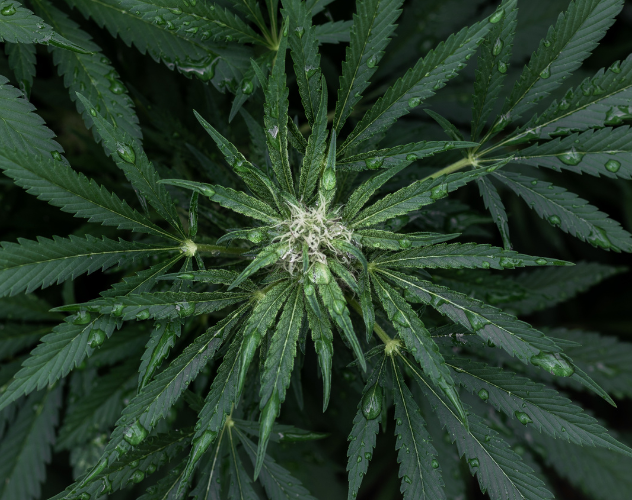
Terpenes are also studied in relation to the entourage effect, including whether they may influence how cannabinoids behave or interact with other biological systems. However, research has not established that particular terpene and cannabinoid combinations reliably produce specific effects in humans.
So, while terpenes clearly contribute to aroma and flavour, their role in a wider entourage effect remains under investigation.
How does the entourage effect relate to THCA hemp tea?
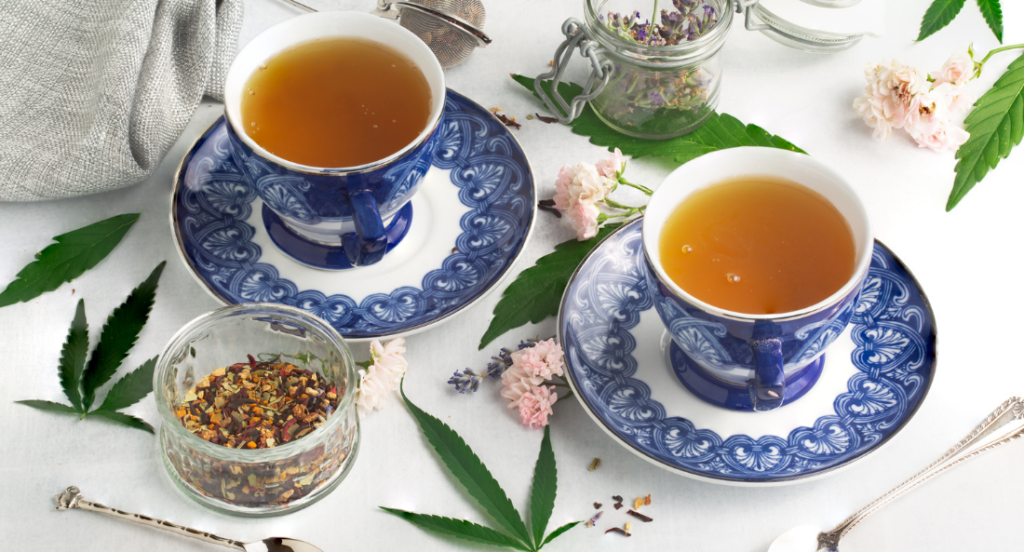
THCA hemp tea is prepared using whole flower, which naturally contains a combination of cannabinoids, terpenes, flavonoids and other plant compounds rather than a single isolated cannabinoid.
This is where the entourage effect theory becomes relevant. As these compounds are present together, researchers are interested in whether they may interact with or influence one another rather than acting entirely independently. However, this remains a developing area of research and should not be treated as a proven benefit of THCA hemp tea.
The wider plant profile also helps explain why different THCA flowers can produce noticeably different teas in terms of aroma and flavour, even when their THCA concentrations are similar. These differences reflect variations in cannabinoids, terpenes and other plant compounds.
Type 1 vs Type 2: different combinations of cannabinoids
A useful example of cannabinoid diversity is the difference between Type 1 and Type 2 THCA flower.
Type 1 THCA flower is typically high in THCA and low in CBD, while Type 2 THCA:CBD flower contains a more balanced combination of THCA and CBD. Both can also contain terpenes and smaller amounts of other cannabinoids.
Strains within either type can vary further in their cannabinoid and terpene profiles. Labels such as indica, sativa and hybrid may describe how a strain is marketed, but they do not reliably predict its precise chemical composition.
THCA itself is non-psychoactive in its raw form, unlike THC, which is associated with psychoactive effects.
What does the research tell us about the entourage effect?
Researchers continue to investigate how cannabinoids, terpenes, and other plant compounds may interact, including through the endocannabinoid system and other biological pathways.
Laboratory, preclinical and limited human research has explored interactions between particular compounds. However, current reviews conclude that there is not enough evidence to establish the entourage effect as a consistent or predictable phenomenon in humans. More research, particularly well-controlled studies in humans, is still needed.
For this reason, claims that the entourage effect reliably improves sleep, anxiety, appetite or other health outcomes go beyond what current evidence can establish.
It’s more accurate to describe the entourage effect as a potential interaction between plant compounds that remains under investigation, rather than a confirmed therapeutic benefit of THCA hemp tea.
Why cannabinoid and terpene profiles still matter
Even without assuming a proven entourage effect, it is still useful to look beyond THCA percentage when comparing THCA flower for tea.
A flower’s wider cannabinoid profile can include THCA, CBD and smaller amounts of other cannabinoids, while its terpene profile helps shape the aroma and flavour of the flower and the finished tea.
Two flowers with similar THCA concentrations can therefore have quite different cannabinoid and terpene profiles, as well as noticeably different aromas and flavours.
For UK THCA hemp tea drinkers, one practical takeaway from the entourage effect theory is that looking at the wider cannabinoid and terpene profile gives a fuller picture of a flower’s composition, aroma and flavour than focusing on THCA percentage alone.
Key takeaways: understanding the entourage effect
The entourage effect describes the theory that cannabinoids, terpenes, flavonoids and other plant compounds may interact with or influence one another rather than acting entirely independently.
Researchers are investigating how these compounds may interact through the endocannabinoid system and other biological pathways, but current evidence does not establish a consistent or predictable entourage effect in humans.
For that reason, the entourage effect should be understood as a proposed interaction rather than a proven health benefit, while established characteristics such as cannabinoid content, aroma and flavour remain important when comparing different THCA flowers.
Buy THCA hemp flowers at Kushte
At Kushte, you can shop high-quality THCA flowers, including Type 1 and Type 2 THCA flowers at competitive prices. Compare different cannabinoid concentrations, strains, aromas and terpene profiles to find an option that suits your preferences.
See our FAQs for more information or get in touch with us if you need any assistance.
Frequently asked questions
The entourage effect is the theory that cannabinoids, terpenes and other plant compounds may influence one another when present together, rather than acting completely independently.
THCA hemp tea is made from whole flower, which naturally contains a mixture of cannabinoids, terpenes, flavonoids and other plant compounds. The entourage effect theory is relevant because it considers how those compounds may interact or influence one another when present together.
Type 1 and Type 2 THCA flowers contain different cannabinoid profiles. This makes them useful examples when discussing how different combinations of plant compounds may potentially interact, but research does not establish a predictable entourage effect for either type.
Disclaimer: This article is for informational purposes only and does not constitute medical advice. Always seek guidance from a healthcare provider before starting any new supplement.